In the world of online chatting, texting, and social media, slang evolves faster than ever.
One term you might have come across is “cap”. If you’ve seen someone type “no cap” or “that’s cap” and felt confused, you’re not alone.
People frequently search for cap slang meaning to understand what it represents in conversations across platforms like TikTok, Instagram, WhatsApp, and Snapchat.
This article will break down the meaning of cap, its origins, how it’s used in daily chats, and the subtle differences depending on context.
Whether you want to sound in-the-know or just understand your friends better, we’ll make everything crystal clear in simple, easy-to-digest language.
What Does “Cap” Mean in Text & Chat?
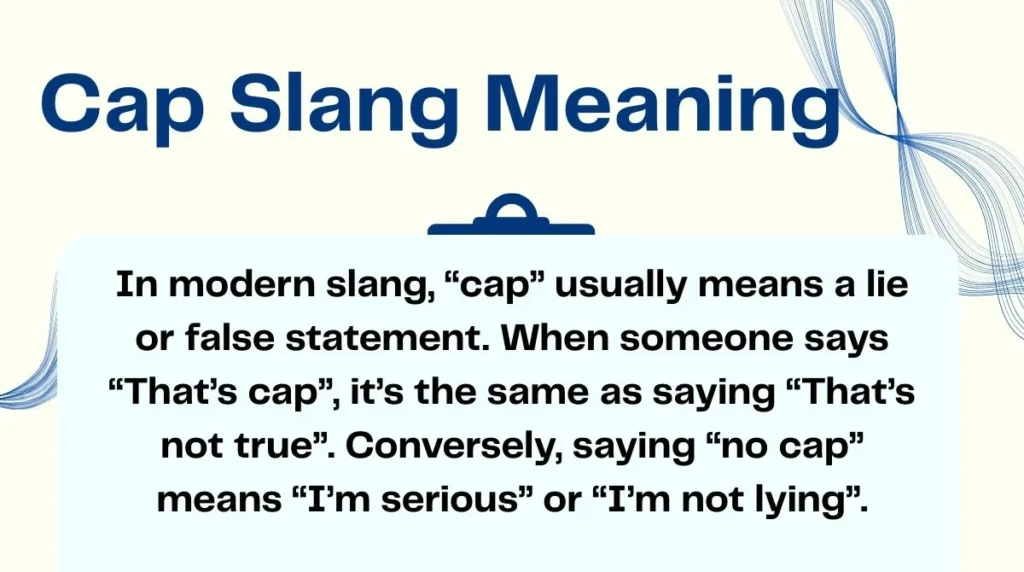
In modern slang, “cap” usually means a lie or false statement. When someone says “That’s cap”, it’s the same as saying “That’s not true”. Conversely, saying “no cap” means “I’m serious” or “I’m not lying”.
- Example:
- Friend: “I can run 10 miles without stopping.”
- You: “That’s cap 😏”
The term is most commonly used in informal chats, social media comments, and text messages. It helps people quickly express disbelief or honesty without lengthy explanations.
Full Form, Stands For & Short Meaning of “Cap”
Interestingly, “cap” doesn’t have a long form—it’s not an acronym. Its meaning is fully contextual:
- Cap = lie, falsehood, exaggeration
- No cap = truth, honesty, seriously
The simplicity of this slang makes it highly adaptable. People often mix it with emojis or other phrases to emphasize their point.
Origin, History & First Known Use of “Cap”
The slang “cap” comes from African American Vernacular English (AAVE). It became widely recognized in the early 2010s through hip-hop and rap music. Artists like Future, Young Thug, and Big Sean popularized phrases such as “no cap”, embedding it into pop culture.
The term likely stems from the idea of “capping,” which originally meant “to brag or exaggerate” in street slang. Over time, it evolved into the broader meaning of calling out lies or exaggerations.
How People Use “Cap” in Daily Conversations
“Cap” is versatile and casual. Here’s how it shows up in everyday speech:
- Calling someone out: “You said you finished your homework in 5 minutes? Cap.”
- Emphasizing honesty: “I really loved your outfit, no cap.”
- Playful teasing: “You think you can beat me at Fortnite? That’s cap 😂”
It’s common in texting and voice chats alike, often paired with humor or sarcasm.
“Cap” Meaning Across WhatsApp, Instagram, TikTok & Snapchat
On social media platforms, cap and no cap are everywhere:
- TikTok: Short videos often include captions like “No cap, this trend is fire 🔥”.
- Instagram: Comments like “That outfit is cute, no cap” are typical.
- WhatsApp: Friends text “You really met them? Cap!” for playful disbelief.
- Snapchat: Users snap photos with captions like “No cap, best day ever 😎”.
The slang works across all platforms because it’s short, expressive, and easy to pair with emojis.
Different Meanings of “Cap” in Other Fields
While online, cap = lie, in other contexts:
- Clothing: Cap = a hat
- Finance: Market cap = market capitalization
- Sports: Cap = appearance for a national team
Context is key; online slang meaning is different from everyday professional or academic use.
Common Confusions, Mistakes & Wrong Interpretations
Many newcomers confuse cap with:
- Caps lock on keyboards (writing in all capital letters)
- Physical hats or caps
- Other slang words like “cat” or “cop”
Remember: In texting, if someone says “cap”, they almost always mean lie or falsehood.
Similar Terms, Alternatives & Related Slang
Other slang that carries a similar vibe:
- Sus – suspicious or shady behavior
- Fake – not genuine
- Lies – direct alternative
- Tea – gossip, sometimes paired with cap
Using these interchangeably depends on context, tone, and platform.
Examples of “Cap” in Real Chat Situations
- “You won the lottery? Cap 😳”
- “I swear I didn’t eat the last slice, no cap.”
- “That story is cap, we all know it 😏”
- “No cap, this is the best movie I’ve seen all year 🍿”
These examples show how playful or serious the term can be.
How to Reply When Someone Says “Cap”
Your reply depends on your intent:
- If it’s playful: “Haha, okay, maybe a little 😅”
- If you’re serious: “No cap, I’m telling the truth”
- If joking: “Big cap energy, fr 😂”
Matching tone and context is key to sounding natural.
Is “Cap” Still Popular? Trends & Online Usage
Yes! Cap remains popular among Gen Z and millennials. TikTok trends and rap lyrics keep it alive, while memes and comment threads continue spreading it. Its short, catchy nature ensures it stays relevant.
FAQs
- What does “no cap” mean?
- It means “seriously” or “not lying.”
- Is “cap” only used by young people?
- Mostly, but anyone active on social media might use it.
- Can “cap” mean a hat?
- Yes, but context usually clarifies the meaning.
- Where did “cap” originate?
- From African American Vernacular English (AAVE) and hip-hop culture.
- How do I respond to “cap” in a chat?
- Match the tone: jokingly, seriously, or with emojis.
Conclusion
Understanding cap slang meaning is essential if you want to stay fluent in online conversations.
It’s a quick, fun way to call out lies or emphasize honesty. From TikTok videos to WhatsApp messages, cap keeps popping up, showing how language evolves with culture.
Next time someone says “That’s cap” or “No cap”, you’ll be ready to respond naturally. Embrace it, have fun, and maybe even sprinkle a few emojis for extra flair 😎.

Joseph Henry is the creative mind behind PunsMarkete, spreading smiles one clever pun and joke at a time. He believes laughter is the shortest distance between people.