The fein meaning slang has become a hot topic as more people encounter the word across TikTok, Instagram, music lyrics, and casual chats.
If you’ve seen someone type “fein” or repeat it for emphasis and felt confused, you’re not alone.
Many users search this term because it looks simple but carries multiple meanings depending on context, tone, and platform.
Slang evolves quickly online, and “fein” is a perfect example of how one word can shift from an older meaning to a modern viral expression.
This article breaks down exactly what “fein” means in slang, how people use it today, where it came from, and why it’s still trending.
Whether you’re decoding a message, trying to keep up with social media language, or just curious, this guide explains everything clearly and simply.
What Does Fein Mean in Text & Chat?
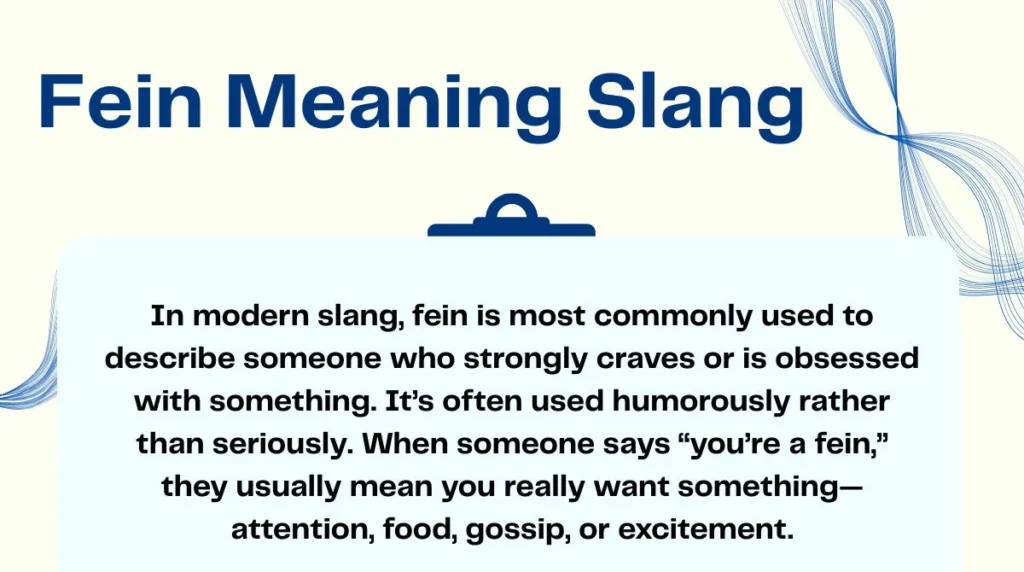
In modern slang, fein is most commonly used to describe someone who strongly craves or is obsessed with something. It’s often used humorously rather than seriously. When someone says “you’re a fein,” they usually mean you really want something—attention, food, gossip, or excitement.
In text and chat, “fein” works as a noun, verb, or even an expression. The meaning depends on tone and context. Friends often use it jokingly, not as an insult. For example, calling someone a “snack fein” means they really love snacks, not that they have a problem.
The word also appears as hype slang, especially after becoming popular in music and TikTok trends. In that case, repeating “fein, fein, fein” can simply express excitement, chaos, or high energy rather than craving.
Key chat meanings include:
- Wanting something badly
- Acting obsessed in a playful way
- Showing excitement or hype
- Teasing a friend
In short, the fein meaning slang in texting is informal, expressive, and heavily dependent on vibe rather than strict definition.
Full Form, Stands For & Short Meaning of Fein
One important thing to know is that fein has no full form in slang usage. It is not an acronym and does not stand for individual letters. Many people mistakenly assume it must be shorthand, but it’s actually a shortened spelling derived from another word.
The slang “fein” comes from “fiend”, a word that traditionally described someone addicted to something. Over time, online users simplified the spelling to “fein” because it looks cleaner and fits modern texting style.
Short meanings of “fein” include:
- Someone who really wants something
- A playful way to say “obsessed”
- A hype word showing energy or excitement
In casual conversation, it rarely carries the heavy meaning of addiction anymore. Instead, it’s lighthearted and expressive. Saying “I’m a coffee fein” just means you love coffee a lot.
So if you’re searching for a full form, the answer is simple: there isn’t one. The power of the word comes from usage, not abbreviation.
Origin, History & First Known Use of Fein
The fein meaning slang has roots that go back further than many people expect. Its origin traces to the word “fiend,” which has existed in English for centuries. Traditionally, a fiend referred to an evil spirit or demon, and later it evolved to describe someone with an uncontrollable desire.
In urban slang, especially in the late 20th century, “fiend” became associated with someone addicted to drugs or habits. As internet culture grew, spelling became more flexible. Online users started writing “fiend” as “fein” for speed, style, and uniqueness.
The modern explosion of “fein” happened through:
- Hip-hop culture
- Social media captions
- Viral TikTok audio and memes
Music also played a huge role in pushing the term into mainstream slang, where it became less serious and more playful. Today, most users don’t even think about its original meaning. Instead, they see it as a fun, exaggerated way to express desire or hype.
How People Use Fein in Daily Conversations
In everyday conversations, fein is casual, playful, and often exaggerated. People use it mostly among friends, not in formal settings. The tone matters more than the word itself.
Common ways people use “fein” include:
- Teasing friends
- Describing habits
- Expressing excitement
- Making jokes
For example, if someone keeps checking their phone, a friend might say, “You’re a notification fein.” This isn’t rude—it’s friendly teasing.
“Fein” can also be self-referential. People often call themselves a fein to exaggerate their interests:
- “I’m a late-night snack fein.”
- “I’m a gym fein lately.”
In spoken conversation, it’s usually pronounced like “feend.” The spelling “fein” mostly appears in text, captions, and comments.
Fein Meaning Across WhatsApp, Instagram, TikTok & Snapchat
The fein meaning slang shifts slightly depending on the platform.
On WhatsApp, it’s mostly used in private chats:
- Friendly teasing
- Inside jokes
- Habit-based humor
On Instagram, “fein” often appears in captions or comments:
- Describing obsession with fashion, food, or fitness
- Reacting to posts with hype
On TikTok, the meaning leans heavily into energy and chaos:
- Repeated “fein” = excitement
- Used with music, dance, or dramatic clips
On Snapchat, it’s short and reactive:
- “You a fein 😂”
- “Fein behavior fr”
Across platforms, context defines meaning. None of these uses are formal, and most are meant to be funny or expressive.
Different Meanings of Fein in Other Fields
Outside slang, fein can have entirely different meanings.
In German, “fein” means:
- Fine
- Delicate
- High-quality
In names, Fein can be a surname.
In academic or professional contexts, the slang meaning does not apply at all. This is why context is critical. If someone uses “fein” in a casual chat, it’s slang. In language studies or names, it’s unrelated.
Understanding context prevents misinterpretation, especially for non-native speakers.
Common Confusions, Mistakes & Wrong Interpretations
Many people misunderstand the fein meaning slang, leading to confusion.
Common mistakes include:
- Thinking it’s always negative
- Assuming it means addiction literally
- Believing it’s an acronym
- Confusing it with German “fein”
In slang, “fein” is rarely serious. It’s more about exaggeration than judgment. Another mistake is using it in professional messages, where it sounds inappropriate.
Always consider:
- Who you’re talking to
- Where you’re talking
- The tone of the conversation
Similar Terms, Alternatives & Related Slang
If you understand “fein,” you’ll also recognize similar slang terms:
Related slang includes:
- Fiend – original form
- Addicted – casual exaggeration
- Obsessed – common alternative
- Down bad – joking desire
- Glazed – overly impressed
🔗 Internal linking suggestion: You can link this article to related slang guides like “bet meaning slang,” “cap meaning slang,” or “sus meaning slang.”
Examples of Fein in Real Chat Situations
Quick examples for easy scanning:
- “You already ate and you still hungry? You a fein 😂”
- “Bro is a coffee fein ☕”
- “Fein behavior fr 😭”
- “Why you replaying the song 20 times? Fein energy 🔥”
- “I’m a dessert fein, not sorry 😌”
How to Reply When Someone Says Fein
How you reply depends on tone.
Playful replies:
- “Yeah, I won’t deny it 😭”
- “Guilty as charged 😂”
- “Fein and proud.”
Defensive but light:
- “Nah, I just like it.”
- “Not a fein, just dedicated.”
Going along with the joke keeps conversations fun and natural.
Is Fein Still Popular? Trends & Online Usage
Yes, fein is still popular, especially among Gen Z and younger millennials. Its flexibility keeps it relevant. Trends show it’s frequently used in:
- Short-form video captions
- Meme culture
- Music-inspired slang
While slang evolves fast, “fein” has proven adaptable. Even if usage shifts, the word has already cemented its place in modern internet language.
FAQs About Fein Meaning Slang
1. Is fein an insult?
No, it’s usually playful and joking.
2. Does fein mean addiction?
In slang, it means strong interest, not literal addiction.
3. Is fein the same as fiend?
Yes, it’s a slang spelling variation.
4. Can fein be used seriously?
Rarely. It’s mostly informal.
5. Is fein appropriate for work chats?
No, it’s best kept casual.
Conclusion
The fein meaning slang shows how language evolves through culture, humor, and online trends.
What once described extreme desire has transformed into a playful, expressive word used daily across chats and social media.
Whether it’s teasing a friend, describing your favorite habit, or reacting to something exciting, “fein” adds personality to conversations.
Understanding its meaning helps you stay connected, avoid confusion, and use it naturally without sounding forced.
As long as you pay attention to context and tone, “fein” can be a fun part of your digital vocabulary.
Like most slang, it’s less about strict definition and more about shared understanding—and that’s what keeps it alive online.

Joseph Henry is the creative mind behind PunsMarkete, spreading smiles one clever pun and joke at a time. He believes laughter is the shortest distance between people.