If you’ve ever scrolled through WhatsApp, Instagram, or TikTok and seen “FOMO” pop up in a message, you might have paused and wondered: what does that even mean?
FOMO isn’t just a random set of letters—it’s a popular slang term that perfectly captures a modern-day feeling most of us know all too well.
In this article, we’ll break down FOMO meaning in text, its origin, usage, and even some clever ways to respond when someone drops it in your chat.
Whether you’re a social media newbie or just trying to keep up with texting lingo, you’ll leave here fully informed—and maybe a little less FOMO-stricken yourself.
What Does FOMO Mean in Text & Chat? 💬
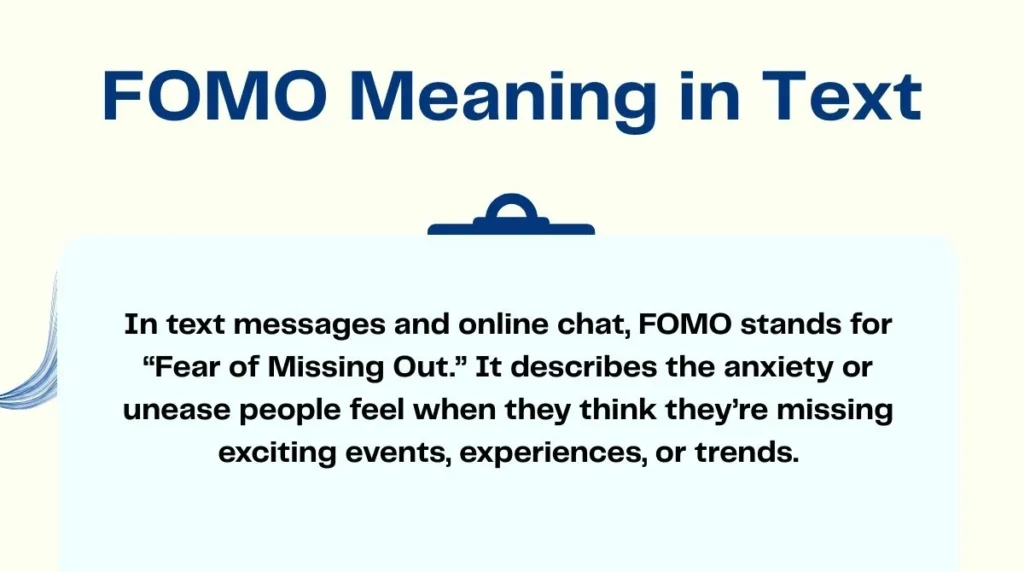
In text messages and online chat, FOMO stands for “Fear of Missing Out.” It describes the anxiety or unease people feel when they think they’re missing exciting events, experiences, or trends.
- Example: “I can’t believe everyone’s at the concert without me 😩 total FOMO!”
- Example: “Scrolling through your vacation pics—major FOMO over here 🌴✈️”
Essentially, it’s that nagging feeling when your friends seem to be having more fun than you—or when a trending topic is blowing up, and you’re not part of it.
In chats, it’s often used casually, with emojis or playful exaggeration. Its popularity has skyrocketed because social media constantly shows us what we’re “missing.”
Full Form, Stands For & Short Meaning of FOMO 🔍
- Full Form: Fear Of Missing Out
- Short Meaning: Anxiety or worry about being left out of events, trends, or experiences
- Usage Tone: Informal, casual, often humorous or self-deprecating
FOMO can also describe a mental state beyond texting—like checking your phone compulsively or RSVPing to every invite to avoid regret.
Origin, History & First Known Use of FOMO 🕰️
FOMO is surprisingly recent in modern language. The term first appeared in the early 2000s, largely in online marketing and psychology discussions. It became popular as social media platforms like Facebook and Instagram made everyone’s social life visible.
- Early Reference: A 2004 article in Marketing News described FOMO as a driver for consumer behavior.
- Social Media Boom: By 2010, FOMO was everywhere, thanks to Instagram, Snapchat, and Twitter.
The concept is rooted in human psychology—the fear of missing experiences has existed forever—but the catchy acronym is purely modern.
How People Use FOMO in Daily Conversations 🗨️
FOMO isn’t just for texting—it sneaks into spoken language, memes, and social media captions.
- “I didn’t go to the party… now I have total FOMO 😭”
- “Seeing everyone post about the sale gave me major FOMO 🛍️”
- “FOMO is real when my friends are traveling without me 🌍”
It’s versatile: you can use it for fun, humor, or genuine expression of anxiety about missing out.
FOMO Meaning Across WhatsApp, Instagram, TikTok & Snapchat 📱
Different platforms use FOMO slightly differently:
- WhatsApp: Often in casual conversation, paired with emojis.
- Instagram: Seen in stories or comments, usually when reacting to events, trips, or trends.
- TikTok: Frequently used in hashtags like #FOMO or #FOMOmoment to describe relatable situations.
- Snapchat: Short-lived content enhances FOMO because snaps disappear quickly.
💡 Tip: On all platforms, FOMO is usually a playful expression, but sometimes it signals real social anxiety.
Different Meanings of FOMO in Other Fields 🧠
Though FOMO primarily refers to social anxiety, it’s also used in other contexts:
- Finance/Investing: Fear of missing a market opportunity. Example: “I bought the stock late because of FOMO 📈”
- Marketing: Strategies exploit FOMO to encourage purchases or sign-ups.
- Gaming: Feeling anxious about missing special events, loot, or rewards.
So FOMO isn’t just about parties—it’s everywhere modern life shows us what others are doing.
Common Confusions, Mistakes & Wrong Interpretations ❌
- Not: “FOMO” = fun, positive excitement. It’s often anxious or regretful.
- Not: Only for young people. Adults and professionals experience FOMO too.
- Mistake Example: “I have FOMO because I’m having fun.” (Incorrect: FOMO is about missing out, not enjoying something.)
Similar Terms, Alternatives & Related Slang 🔄
- JOMO: Joy Of Missing Out—enjoying staying in.
- YOLO: You Only Live Once—motivates risk-taking, sometimes causing FOMO.
- FOMU: Fear of Messing Up—a derivative related to mistakes instead of missing events.
These terms often appear together in memes or discussions about modern lifestyle pressures.
Examples of FOMO in Real Chat Situations 💬
- Friend 1: “Everyone’s at the concert 😭”
- Friend 2: “Omg, FOMO!”
- Friend 1: “I should’ve come, I hate missing out!”
- Chat Caption: “Just saw all your vacation pics… I’m drowning in FOMO 🏖️😩”
Short, expressive, and usually paired with emojis for emphasis.
How to Reply When Someone Says FOMO ✅
- “Haha, I feel you 😅 next time we’ll plan together.”
- “Don’t worry, we’ll hang soon, no more FOMO!”
- “Join us! FOMO’s no fun alone 😎”
Friendly, light-hearted replies work best. You can even tease a bit, but keep it playful.
Is FOMO Still Popular? Trends & Online Usage 📈
FOMO remains widely used, especially among social media users aged 16–35. Its popularity may fluctuate, but the concept is evergreen—people always fear missing out!
- TikTok trends often revive FOMO expressions.
- Hashtags like #FOMO, #NoFOMO, or #FOMOmoments keep it relevant.
- Even marketers still use FOMO in campaigns because it works.
FAQs About FOMO Meaning in Text ❓
1. What does FOMO mean in texting?
It means “Fear Of Missing Out,” anxiety about not being part of events or trends.
2. How do you use FOMO in a sentence?
“Scrolling through your photos is giving me major FOMO 😩”
3. Is FOMO the same as JOMO?
No, JOMO means Joy Of Missing Out, the opposite feeling of satisfaction for staying in.
4. Can adults have FOMO?
Absolutely. It’s not age-specific; anyone can feel left out of events or trends.
5. Is FOMO considered slang?
Yes, it’s informal and widely used in texting, social media, and casual conversation.
Conclusion 🎯
FOMO perfectly captures a common modern feeling: the fear of missing out on something exciting, trending, or memorable.
From texting with friends to scrolling through social media feeds, it’s a term that reflects both humor and social anxiety in one neat acronym.
Understanding FOMO not only helps you communicate online but also recognize when you’re feeling left out—or maybe even embrace JOMO for a healthier mindset.
Next time you see FOMO in a chat, you’ll know exactly what it means—and maybe even respond with confidence (and a playful emoji or two 😉).