The phrase habibi has become increasingly popular across social media, music, and everyday conversations.
People often search for habibi meaning after seeing it in texts, Instagram captions, TikTok comments, or hearing it in songs.
While it sounds warm and friendly, many people are unsure what it truly means or how it should be used. Is it romantic? Is it casual? Can anyone say it?
Habibi comes from Arabic, but its modern usage has expanded far beyond language and culture boundaries.
Today, it’s used by friends, couples, creators, and influencers around the world.
Understanding the real meaning of habibi helps you avoid awkward misunderstandings and use it naturally in conversations.
In this guide, we’ll explore its origin, meanings across platforms, correct usage, examples, and how to respond when someone calls you habibi.
What Does Habibi Mean in Text & Chat?
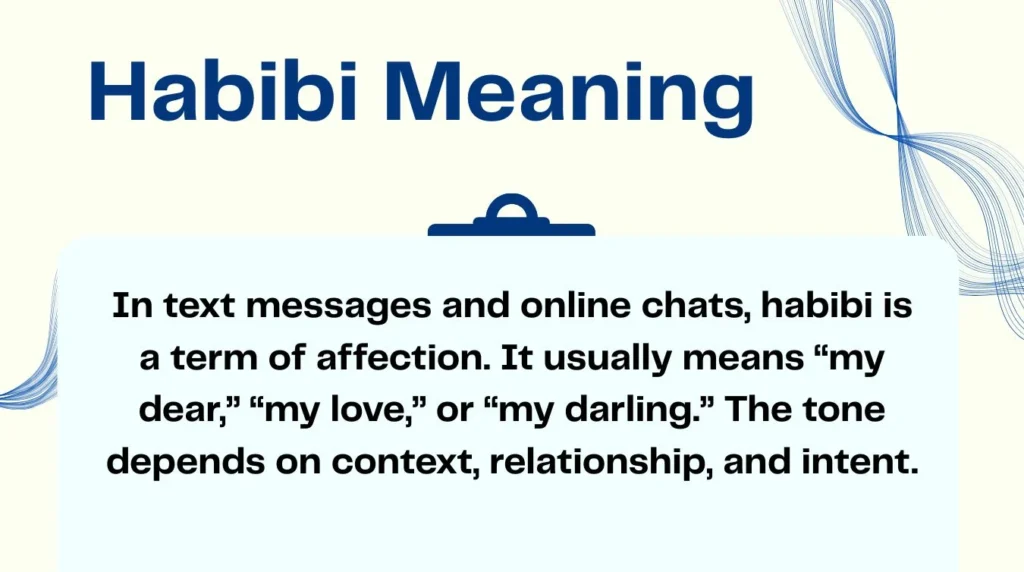
In text messages and online chats, habibi is a term of affection. It usually means “my dear,” “my love,” or “my darling.” The tone depends on context, relationship, and intent.
People use habibi to express:
- Warmth
- Friendship
- Romantic affection
- Playful closeness
In casual chats, it doesn’t always imply romance. Friends may use it jokingly, while couples often use it lovingly. Tone, emojis, and message context matter a lot.
Quick chat examples:
- “Relax, habibi 😊 everything will be fine.”
- “Good morning, habibi ❤️”
- “Come on, habibi, let’s go 😂”
In texts, habibi softens messages and adds emotional warmth. It’s similar to saying babe or dear in English, but with cultural flavor.
Full Form, Stands For & Short Meaning of Habibi
Habibi does not stand for an abbreviation. It is a real Arabic word, not slang created from initials.
Short meaning:
- Habibi = my beloved / my dear
Word breakdown:
- Habib = beloved
- -i = my
So, habibi literally translates to “my beloved.”
Related forms:
- Habibti – feminine version (used when addressing a woman)
- Habibi – masculine version (commonly used for men, but also used generally online)
Online, people often ignore gender rules, using habibi freely regardless of who they’re talking to.
Origin, History & First Known Use of Habibi
Habibi originates from Classical Arabic, spoken for centuries across the Middle East and North Africa. Traditionally, it was used within families, between close friends, or romantic partners.
Historically, habibi appeared in:
- Poetry
- Love songs
- Religious and cultural writings
Its global rise happened due to:
- Arabic music becoming international
- Social media exposure
- Pop culture and viral videos
- Multilingual online communities
Today, habibi has crossed cultural boundaries. Many non-Arabic speakers use it without speaking Arabic fluently, making it a global expression of affection rather than just a regional word.
How People Use Habibi in Daily Conversations
Habibi is flexible and friendly. People use it differently depending on the relationship.
Common daily uses:
- Romantic partners expressing love
- Friends teasing each other
- Parents talking to children
- Influencers addressing followers
Examples:
- “Eat well, habibi.”
- “Don’t stress, habibi.”
- “Miss you, habibi ❤️”
Tone is everything. Said sincerely, it’s loving. Said jokingly, it’s playful. Rarely, it can be sarcastic, but that depends on delivery.
Habibi Meaning Across WhatsApp, Instagram, TikTok & Snapchat
WhatsApp:
Used in private chats to show affection or closeness.
Instagram:
Often appears in captions, comments, and bios.
- “Stay blessed, habibi ✨”
TikTok:
Common in trends, audio clips, and comments.
- “This song hits different, habibi 🔥”
Snapchat:
Used casually between friends or partners.
Across platforms, habibi signals friendliness, warmth, and emotional connection.
Different Meanings of Habibi in Other Fields
Outside daily speech, habibi appears in:
- Music: romantic or emotional lyrics
- Brand names: suggesting warmth or love
- Pop culture: symbolic of Middle Eastern aesthetics
It always keeps a positive, affectionate meaning. It’s rarely used in formal or technical contexts.
Common Confusions, Mistakes & Wrong Interpretations
People often misunderstand habibi.
Common mistakes:
- Thinking it always means romantic love
- Believing it’s inappropriate to use casually
- Confusing habibi with habibti
- Assuming it’s slang (it’s a real word)
Habibi is affectionate, but not automatically romantic. Context defines intent.
Similar Terms, Alternatives & Related Slang
Similar expressions include:
- Babe
- Darling
- Honey
- Love
- Dear
Related Arabic terms:
- Habibti (feminine)
- Azizi (my dear)
- Ya roohi (my soul)
Internal linking suggestion:
You may also like related slang meanings such as “wallah meaning” or “inshallah meaning.”
Examples of Habibi in Real Chat Situations
- “Take care, habibi 😊”
- “You did great today, habibi 👏”
- “Miss you already, habibi ❤️”
- “Calm down, habibi 😂”
These examples show warmth, not formality.
How to Reply When Someone Says Habibi
You can reply based on tone:
- Friendly: “Thanks, habibi 😊”
- Romantic: “Always, habibi ❤️”
- Playful: “Haha okay, habibi 😂”
Mirroring the tone keeps conversations natural.
Is Habibi Still Popular? Trends & Online Usage
Yes, habibi remains very popular. Its usage continues to grow due to:
- Social media trends
- Music and reels
- Cultural blending online
Search interest stays strong because new users keep discovering it.
FAQs About Habibi Meaning
1. Is habibi romantic?
It can be, but it’s also used platonically.
2. Can non-Arabic speakers say habibi?
Yes, it’s widely used globally.
3. Is habibi male or female?
Habibi is masculine; habibti is feminine.
4. Is habibi respectful?
Yes, when used appropriately.
5. Can habibi be used jokingly?
Absolutely, especially among friends.
Conclusion
Understanding the habibi meaning helps you use it naturally and confidently.
At its core, habibi is a warm, affectionate word that expresses closeness, care, and friendliness.
While rooted in Arabic language and culture, it has evolved into a global expression used across texts, chats, and social platforms.
Whether spoken between friends, lovers, or online communities, its tone depends on context rather than strict rules.
By knowing when and how to use habibi, you can avoid misunderstandings and communicate more naturally.
As language continues to blend across cultures, habibi remains a beautiful example of how words travel, adapt, and connect people worldwide.

Joseph Henry is the creative mind behind PunsMarkete, spreading smiles one clever pun and joke at a time. He believes laughter is the shortest distance between people.