If you’ve been scrolling through social media or chatting with friends online, you might have come across the word “mid” and wondered what it really means. Is it an insult?
A compliment? Or just random internet slang? 🤔 “Mid” has quickly become a popular term in texting, TikTok, Instagram, and even gaming communities.
People search for its meaning because its usage isn’t always obvious, and misinterpreting it can lead to confusion in conversations.
In this article, we’ll break down the slang meaning of mid, explore its origins, and show how it’s used across various platforms.
Whether you’re a teen, a social media enthusiast, or just curious, this guide will make you fluent in the language of the internet.
What Does “Mid” Mean in Text & Chat?
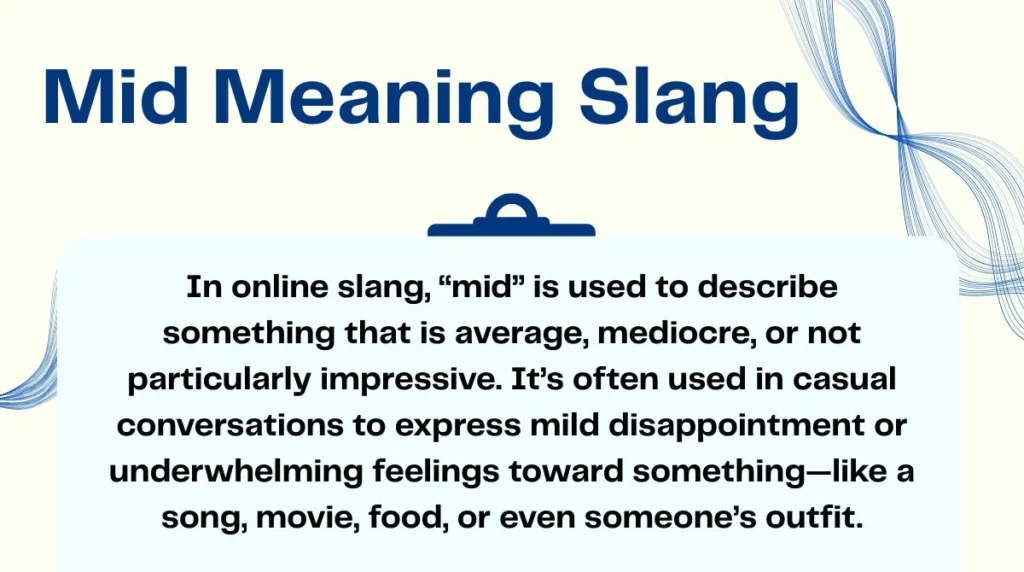
In online slang, “mid” is used to describe something that is average, mediocre, or not particularly impressive. It’s often used in casual conversations to express mild disappointment or underwhelming feelings toward something—like a song, movie, food, or even someone’s outfit.
For example:
- “That movie was mid, honestly.” 🎬
- “The new album is mid, not as good as the last one.” 🎵
In texting, “mid” is short, punchy, and to the point—perfect for fast conversations. It’s a subtle way to say something isn’t great without being overly harsh.
Full Form, Stands For & Short Meaning of “Mid”
Technically, “mid” doesn’t have a long form—it’s simply slang for “mediocre” or “average.” Some people jokingly expand it as “middle”, referencing the middle quality between bad and good.
Quick summary:
- Full Meaning: Mediocre / Average / Not impressive
- Short Meaning: Mid
- Tone: Casual, sometimes slightly dismissive
Unlike abbreviations like “LOL” or “BRB,” mid isn’t an acronym—it’s a straightforward descriptor used in informal speech.
Origin, History & First Known Use of “Mid”
The term “mid” has been around in casual conversation for decades, but its current slang usage exploded with online platforms like TikTok, Twitter, and Instagram in the early 2020s. The word originally comes from “middle” in standard English, indicating something neither high nor low in quality.
- First Known Slang Usage: Around 2020 on TikTok and gaming forums
- Popularity Boost: When influencers and content creators started rating songs, movies, or shows as “mid”
- Cultural Impact: Now widely used by Gen Z and Millennials in online reviews, memes, and casual chats
How People Use “Mid” in Daily Conversations
“Mid” is versatile and can be inserted almost anywhere in casual chat. People often use it to share opinions or give mild criticism without sounding rude.
Examples:
- “That party was mid, nothing special.” 🥱
- “His outfit is mid, I expected better.” 👕
- “The pizza here is mid at best.” 🍕
Notice how it doesn’t carry heavy negativity—it’s just a subtle way of saying “meh.”
“Mid” Meaning Across WhatsApp, Instagram, TikTok & Snapchat
The slang spreads differently depending on the platform:
- WhatsApp: Quick group chat opinions → “The movie was mid”
- Instagram: Meme captions or comment threads → “Her new post is mid”
- TikTok: Video reviews, reaction clips → “This trend is mid”
- Snapchat: Casual streak conversations → “Mid snap, not funny”
Across platforms, the tone stays casual, making it perfect for social interactions.
Different Meanings of “Mid” in Other Fields
While online slang is the most common usage, “mid” can have other meanings depending on context:
- Gaming: Middle position or tier → “I play mid lane in League of Legends”
- Music: Middle notes or pitch
- Sports: Midfielder → “He’s a mid in soccer”
Understanding context is key—without it, “mid” can be confusing.
Common Confusions, Mistakes & Wrong Interpretations
Many beginners misinterpret “mid” as positive or neutral, but it’s slightly dismissive. Other common mistakes:
- Thinking it’s a compliment → Wrong, it’s usually lukewarm
- Using it formally → Avoid in professional emails
- Confusing it with “midlife” or “middle-aged” → Different context
Similar Terms, Alternatives & Related Slang
If you want variety, you can use these terms similar to “mid”:
- Meh → Expressing indifference
- Average → Literal meaning
- Basic → Mildly negative
- So-so → Casual description
Examples of “Mid” in Real Chat Situations
- Friend 1: “Did you watch the new Marvel movie?”
Friend 2: “Yeah… it was mid.” 😐 - Instagram Comment: “Her outfit is mid, honestly.”
- TikTok Reply: “This trend is mid, try something else.”
How to Reply When Someone Says “Mid”
Here are some casual ways to respond:
- Agree: “Yeah, I felt the same.”
- Disagree playfully: “Nah, I actually liked it 😎”
- Neutral: “Fair, not the best but okay.”
Keep it light to match the casual tone of the slang.
Is “Mid” Still Popular? Trends & Online Usage
Yes! “Mid” continues to trend online, especially among Gen Z. Its popularity is fueled by TikTok reviews, meme culture, and casual texting. It’s easy to use and instantly understood by social media users.
FAQs
1. Is “mid” a compliment or insult?
It’s mostly neutral-to-negative. It means average or mediocre.
2. Can “mid” be used in professional contexts?
Not recommended. It’s casual slang.
3. Where did “mid” originate?
It comes from “middle” and became popular in online slang around 2020.
4. Is “mid” the same as “meh”?
Similar meaning, but “mid” specifically implies average quality.
5. How do you use “mid” in a sentence?
Example: “The new album is mid, I expected better.” 🎵
Conclusion
The slang term “mid” is simple, casual, and widely understood in online conversations. It’s the go-to word to describe something that’s average, underwhelming, or just okay.
From TikTok trends to WhatsApp chats, understanding “mid” can help you communicate clearly and stay up-to-date with internet culture.
Next time you see a friend say something is “mid,” you’ll know it’s just their way of saying “meh” without overreacting.
Whether you agree or disagree, using “mid” in the right context makes your online interactions sound fresh and relatable.

Joseph Henry is the creative mind behind PunsMarkete, spreading smiles one clever pun and joke at a time. He believes laughter is the shortest distance between people.