“Namaste” is a word that has gained global recognition, but many people search for its exact meaning, origin, and how to use it properly.
Often seen in yoga classes, social media captions, and everyday greetings, namaste is more than just a word—it’s a gesture of respect and acknowledgment.
People are curious about its literal meaning, spiritual significance, and modern usage in texts and chats.
Whether you’re a traveler in India, a yoga enthusiast, or someone exploring new ways to greet others, understanding namaste meaning can deepen your appreciation of this timeless tradition.
In this article, we’ll explore the word from all angles: history, everyday use, online trends, and practical examples in conversation.
What Does Namaste Mean in Text & Chat?
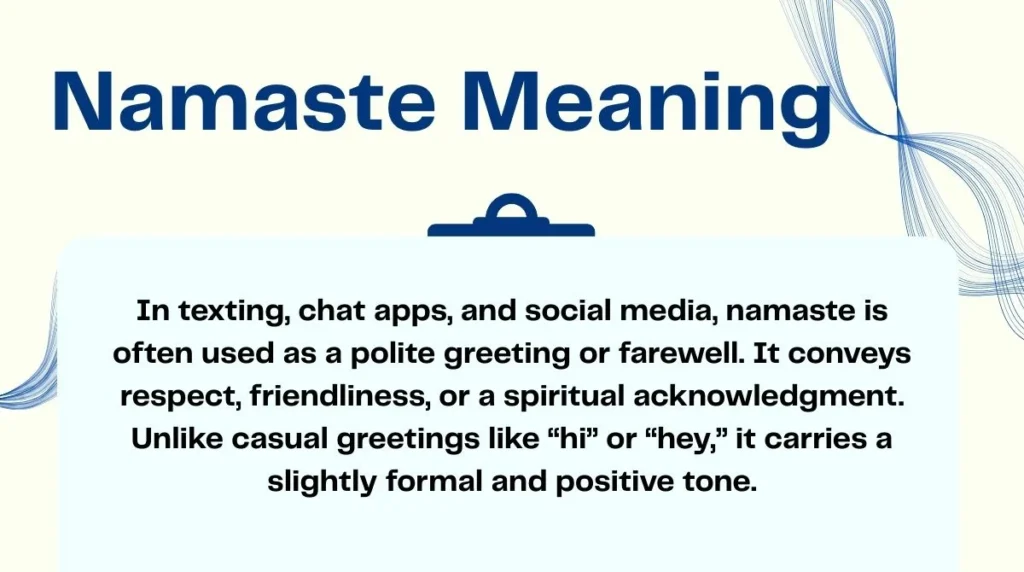
In texting, chat apps, and social media, namaste is often used as a polite greeting or farewell. It conveys respect, friendliness, or a spiritual acknowledgment. Unlike casual greetings like “hi” or “hey,” it carries a slightly formal and positive tone.
Examples in chat:
- “Good morning! 🙏 Namaste!”
- “Namaste, hope you’re having a great day 🌸”
- “Thanks for your help 🙏 Namaste”
Using namaste in chats adds warmth and cultural flair. It’s increasingly common in WhatsApp, Instagram DMs, and even TikTok comments, especially among users interested in mindfulness, yoga, or Indian culture.
Full Form, Stands For & Short Meaning of Namaste
Unlike abbreviations or slang, namaste doesn’t have a “full form” in the conventional sense. Its short meaning can be summarized as:
“I bow to you” or “The divine in me honors the divine in you.”
- Namah → Bow
- Te → To you
This makes it both a greeting and a respectful acknowledgment of another person. In modern English, it’s often loosely translated as “hello,” “goodbye,” or “respectful greetings,” though its spiritual connotation goes deeper.
Origin, History & First Known Use of Namaste
Namaste originates from Sanskrit, one of the oldest languages in the world. It has been used for thousands of years in India, primarily in spiritual and social contexts. Traditionally, the word is spoken while pressing palms together at the chest and slightly bowing the head—a gesture called Anjali Mudra.
Historically, it was not just a greeting but also a recognition of the divine presence within every individual. Ancient Indian texts, including the Vedas, mention gestures and words of respect that align with the modern namaste. Over time, it became common in everyday interactions and later spread globally through yoga, meditation, and cultural exchange.
How People Use Namaste in Daily Conversations
In daily life, namaste is versatile:
- Greeting elders or strangers politely.
- Starting or ending formal meetings.
- Acknowledging someone respectfully in spiritual settings.
Quick examples:
- “Namaste, uncle! How have you been?”
- “Namaste everyone, let’s begin the session.”
- “Namaste, thank you for coming!”
The word can convey warmth, humility, and respect simultaneously.
Namaste Meaning Across WhatsApp, Instagram, TikTok & Snapchat
Social media has added a fun twist to namaste. On platforms like Instagram and TikTok, people use it in captions, hashtags, and comments to signify peace, positivity, or spiritual vibes.
- WhatsApp: Polite greetings in personal chats or groups.
- Instagram: Hashtags like #namaste, often paired with yoga or wellness content.
- TikTok: Trendy clips with yoga poses or mindful gestures.
- Snapchat: Quick greetings or farewells with emojis like 🙏✨
In these contexts, namaste conveys friendliness and mindfulness, making it trendy among wellness enthusiasts.
Different Meanings of Namaste in Other Fields
While its spiritual and social meanings dominate, namaste has minor variations depending on context:
- Yoga & Meditation: Symbolizes inner respect and spiritual connection.
- Cultural Studies: Seen as a form of non-verbal communication.
- Corporate Etiquette (India): Used as a polite greeting during meetings or presentations.
Across these fields, the core meaning remains: respect, acknowledgment, and positivity.
Common Confusions, Mistakes & Wrong Interpretations
Many people misunderstand namaste as:
- A casual hello or goodbye without respect.
- A phrase only for religious or yoga contexts.
- Something to be said without the proper gesture.
Tips: Always pair namaste with a slight bow or folded hands to honor its traditional essence.
Similar Terms, Alternatives & Related Slang
Some alternatives or related terms include:
- Namaskar – Formal, slightly more traditional.
- Pranam – A respectful bow to elders.
- Sat Sri Akal – Used by Sikh communities as a respectful greeting.
- Hello / Hi – Casual English equivalents.
Each has a slightly different tone or cultural nuance.
Examples of Namaste in Real Chat Situations
- Friend: “Good evening!”
You: “Namaste 🙏 How was your day?” - Colleague: “Thanks for your support.”
You: “Namaste! Always happy to help 🌸” - Yoga group chat: “Let’s start the session.”
You: “Namaste everyone 🙏 Ready!”
These examples show how namaste fits naturally into modern communication while retaining respect.
How to Reply When Someone Says Namaste
A simple, respectful reply is to mirror the greeting:
- “Namaste 🙏”
- “Namaste! Nice to meet you.”
- “Namaste, hope you’re doing well 🌸”
Acknowledging with the same gesture or emoji adds warmth.
Is Namaste Still Popular? Trends & Online Usage
Yes! Namaste continues to thrive globally:
- Increasingly used in wellness, yoga, and mindfulness communities.
- Appears in Instagram captions, TikTok videos, and WhatsApp messages.
- Remains a polite greeting in India and South Asian communities worldwide.
Its mix of spiritual meaning and trendy online appeal keeps it relevant in both traditional and modern settings.
FAQs About Namaste
- What is the literal meaning of namaste?
- “I bow to you” or “The divine in me honors the divine in you.”
- Is namaste only used in India?
- No, it’s popular worldwide, especially in yoga and wellness communities.
- Can I use namaste in casual texts?
- Yes, it’s polite and respectful but slightly formal compared to “hi” or “hey.”
- What’s the difference between namaste and namaskar?
- Namaskar is slightly more formal; both convey respect.
- Do I need to fold hands when saying namaste?
- Traditionally, yes, but in chats or casual texts, emojis can represent the gesture 🙏.
Conclusion
Namaste is much more than a simple greeting—it’s a gesture of respect, spirituality, and human connection.
Whether used in everyday life, online chats, or social media, it carries a sense of warmth, mindfulness, and positivity.
By understanding its origin, meaning, and correct usage, anyone can bring a touch of cultural and spiritual awareness to their interactions.
So next time you say namaste, remember it’s not just a word—it’s a meaningful acknowledgment of the divine in others. 🌸🙏

Joseph Henry is the creative mind behind PunsMarkete, spreading smiles one clever pun and joke at a time. He believes laughter is the shortest distance between people.