The NGL meaning is something many people search for after seeing it pop up in texts, comments, or social media stories.
Short slang terms like this move fast online, and if you’re not familiar with them, conversations can suddenly feel confusing.
NGL is especially popular among younger users, influencers, and anyone who spends time on apps like Instagram, TikTok, Snapchat, or WhatsApp.
People use it to sound honest, casual, and relatable without writing long explanations.
Understanding the meaning of NGL helps you read between the lines, catch the tone of a message, and respond naturally.
In this guide, we’ll break down exactly what NGL means, where it came from, how people use it today, and how you can reply with confidence—no awkward guessing needed.
What Does NGL Mean in Text & Chat?
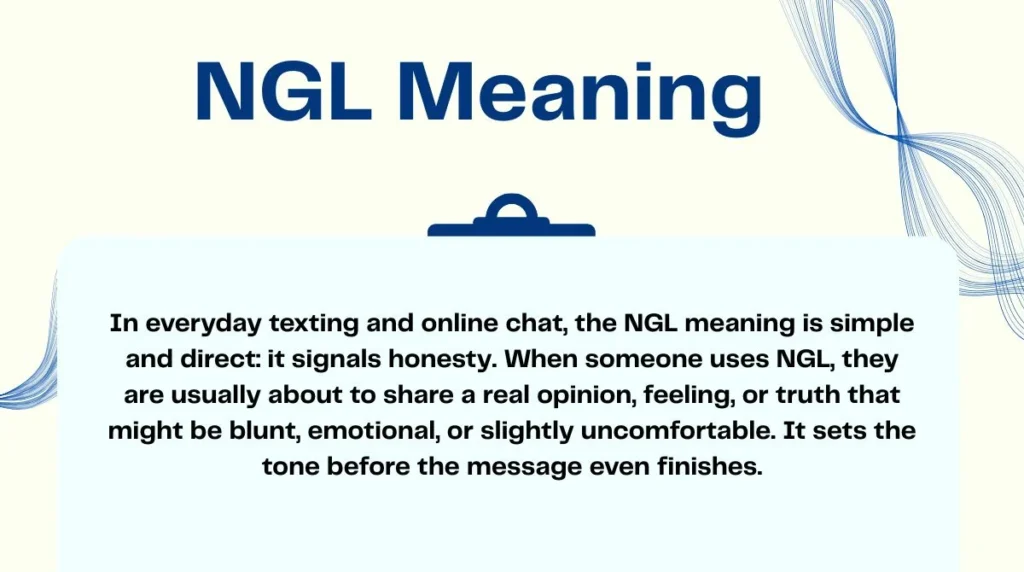
In everyday texting and online chat, the NGL meaning is simple and direct: it signals honesty. When someone uses NGL, they are usually about to share a real opinion, feeling, or truth that might be blunt, emotional, or slightly uncomfortable. It sets the tone before the message even finishes.
NGL is often used at the beginning of a sentence, but it can also appear in the middle or end. Its job is to soften honesty, not make it harsh. Instead of sounding rude, the speaker sounds open and genuine. This is why it’s so common in casual conversations between friends.
In text and chat, NGL can express:
- A personal opinion
- Mild criticism
- A confession
- A surprising thought
For example, when someone says, “NGL, that movie was boring,” they’re being honest but relaxed. Without NGL, the sentence might sound colder.
Tone matters. NGL doesn’t mean negativity by default. It can also introduce positive honesty, like admitting excitement or admiration. Because digital messages lack facial expressions, NGL helps clarify intent.
In fast chats, people like NGL because it’s short, clear, and friendly. It saves time while adding emotional context, which is why it has become a staple in modern messaging.
Full Form, Stands For & Short Meaning of NGL
The full form of NGL is “Not Gonna Lie.” This phrase has existed in spoken English for decades, but the abbreviation became popular with texting and social media.
Broken down simply:
- N = Not
- G = Gonna
- L = Lie
The short meaning of NGL is: “I’m being honest with you.”
What makes NGL powerful is how informal it feels. “Not gonna lie” sounds natural, like spoken conversation, which makes it perfect for casual chats. When shortened to NGL, it keeps the same meaning but fits modern digital style.
NGL is not:
- A serious warning
- A sign of dishonesty
- A formal statement
Instead, it’s a conversational signal. It prepares the reader for honesty, not drama. Many people use it almost automatically, without thinking much about it.
You’ll also see variations like:
- “ngl” (lowercase, very common)
- “Ngl tho” (extra casual)
- “ngl fr” (emphasizing truth)
No matter the format, the meaning stays the same. It’s about being real, open, and straightforward in a relaxed way.
Origin, History & First Known Use of NGL
The phrase “not gonna lie” existed long before the internet. People used it in spoken English to introduce honest thoughts, often casually or humorously. However, the NGL meaning as an abbreviation began to rise with early online chatrooms and SMS texting.
In the early 2000s, character limits pushed users to shorten common phrases. “Not gonna lie” quickly became NGL because it saved space and still made sense. As texting culture grew, so did shorthand slang.
NGL gained real momentum with:
- Online forums
- Instant messaging apps
- Early social media platforms
By the 2010s, NGL was everywhere—Twitter captions, Instagram comments, and meme culture helped spread it even further. Its flexibility made it stick. You could use it seriously, jokingly, or emotionally.
Another reason for its popularity is tone. Internet communication often struggles with clarity. NGL helped users signal honesty without sounding aggressive. That made it socially useful, not just trendy.
Today, NGL feels almost timeless. While many slang terms fade, this one remains relevant because honesty never goes out of style. Its roots in natural speech helped it survive changing platforms and trends.
How People Use NGL in Daily Conversations
In daily conversations, the NGL meaning is all about setting expectations. People use it to let others know they’re speaking from the heart. It’s common in both online and offline-inspired digital chats.
Most people use NGL:
- Before sharing an opinion
- Before admitting a feeling
- Before mild criticism
It often appears in relaxed, friendly discussions. For example, friends might use it when talking about music, movies, relationships, or plans.
NGL also works as a social cushion. Saying “NGL” before something honest makes the message feel less harsh. It shows you’re not trying to offend—just telling the truth.
You’ll notice NGL is rarely used in formal settings. Emails, work chats, or professional messages usually avoid it. It belongs to casual spaces where tone matters more than structure.
People also use NGL humorously. Sometimes it exaggerates honesty for effect, even when the statement is lighthearted. This flexibility is why it fits into so many conversations naturally.
NGL Meaning Across WhatsApp, Instagram, TikTok & Snapchat
The NGL meaning stays consistent across platforms, but how it’s used can change slightly depending on the app.
On WhatsApp, NGL appears in personal chats. Friends use it to talk honestly about daily life, plans, or feelings. It feels private and direct.
On Instagram, NGL often shows up in captions, comments, or story replies. People use it to share opinions, reactions, or compliments:
- “NGL, this outfit is fire 🔥”
- “NGL, I needed this post today”
On TikTok, NGL is common in comments and video text overlays. Creators use it to sound relatable and authentic. Viewers trust content more when it feels honest.
On Snapchat, NGL fits perfectly with casual snaps and quick messages. It’s often paired with emojis to soften the tone:
- “NGL, you look amazing 😄”
Despite different contexts, the core meaning never changes. NGL always signals honesty, just adapted to each platform’s style and speed.
Different Meanings of NGL in Other Fields
While the NGL meaning online usually means “Not Gonna Lie,” the abbreviation can have different meanings in other contexts. This is where confusion sometimes happens.
In professional or technical fields, NGL may stand for:
- Natural Gas Liquids (energy industry)
- National Grid Line (engineering or utilities)
- Non-Glaring Light (lighting or design contexts)
These meanings are completely unrelated to slang. Context is everything. If you see NGL in a casual message or comment, it almost always means “Not Gonna Lie.” In documents or industry discussions, it likely means something else.
This is why reading tone and setting matters. Social media slang rarely overlaps with formal usage, but knowing the difference helps avoid misunderstandings.
Common Confusions, Mistakes & Wrong Interpretations
A common mistake is thinking NGL means sarcasm or negativity. In reality, the NGL meaning is neutral. It can introduce praise just as easily as criticism.
Other misunderstandings include:
- Assuming NGL means someone lied before
- Thinking it’s rude by default
- Using it in formal writing
NGL does not accuse anyone of lying. It simply highlights honesty. Overusing it, however, can weaken its impact. When every sentence starts with NGL, it loses meaning.
Another error is misreading tone. Without context, NGL can seem blunt. That’s why emojis or friendly wording often follow it.
Similar Terms, Alternatives & Related Slang
If you understand the NGL meaning, you’ll notice similar slang with the same purpose. These include:
- TBH – To Be Honest
- FR – For Real
- Honestly – Plain but clear
- Real talk – More serious tone
Each has a slightly different vibe. NGL feels casual and modern, while TBH can feel softer. Choosing the right one depends on tone and audience.
Internal linking suggestions:
- Link to a guide on TBH meaning
- Link to an article on FR meaning in slang
Examples of NGL in Real Chat Situations
Here are natural examples showing the NGL meaning in action:
- “NGL, I didn’t expect today to be this good 😊”
- “That test was hard, ngl 😭”
- “Ngl, I miss our old chats.”
- “NGL this song is on repeat 🔁”
- “I was nervous, ngl, but it worked out.”
These examples show honesty without drama. That’s why NGL feels so natural.
How to Reply When Someone Says NGL
When someone uses NGL, they’re opening up. A good response acknowledges that honesty.
You can reply by:
- Agreeing honestly
- Sharing your own thoughts
- Reassuring them
Examples:
- “Yeah, I feel you.”
- “Same here, ngl.”
- “I appreciate you being honest.”
Matching their tone keeps the conversation smooth and real.
Is NGL Still Popular? Trends & Online Usage
Yes, the NGL meaning is still very popular. Unlike trend-based slang, NGL has stayed relevant for years. Its strength comes from usefulness, not hype.
It continues to appear in:
- Social media comments
- Text messages
- Meme culture
While new slang comes and goes, NGL remains because people always want an easy way to sound honest online.
FAQs About NGL Meaning
1. What does NGL mean in slang?
It means “Not Gonna Lie,” used to introduce honesty.
2. Is NGL rude?
No, it’s usually friendly and casual.
3. Can NGL be positive?
Yes, it’s often used to share compliments or excitement.
4. Should I use NGL in professional messages?
No, it’s best for informal conversations.
5. Is NGL still used in 2025?
Yes, it remains common across social platforms.
Conclusion
Understanding the NGL meaning makes online conversations clearer and more natural. At its core, NGL is about honesty without heaviness.
It helps people share thoughts, feelings, and opinions in a relaxed way that feels human and relatable.
From texting friends to commenting on social media posts, NGL adds emotional context that plain words sometimes lack.
While it may look like just another abbreviation, its staying power shows how useful it really is.
As long as people want to be real online, NGL will continue to have a place in digital language.
Now that you know what it means and how to use it, you can read, reply, and chat with confidence—no guessing required.

Joseph Henry is the creative mind behind PunsMarkete, spreading smiles one clever pun and joke at a time. He believes laughter is the shortest distance between people.