If you’ve seen the word “opp” in a text message, TikTok comment, or rap lyric and wondered what it means, you’re not alone.
The opp meaning slang is searched frequently because it shows up everywhere online—especially in casual chats, memes, and youth culture.
At first glance, it looks like a typo or shorthand, but “opp” actually carries strong meaning depending on context.
For some, it simply means an opponent or rival. For others, it can sound aggressive or street-related.
That’s why people want clarity before using it themselves. This guide explains the meaning of “opp” in plain English, shows how it’s used across social media, and clears up common misunderstandings.
Whether you’re a parent, student, or just curious, this article breaks it down in a friendly, easy-to-read way.
What Does Opp Mean in Text & Chat?
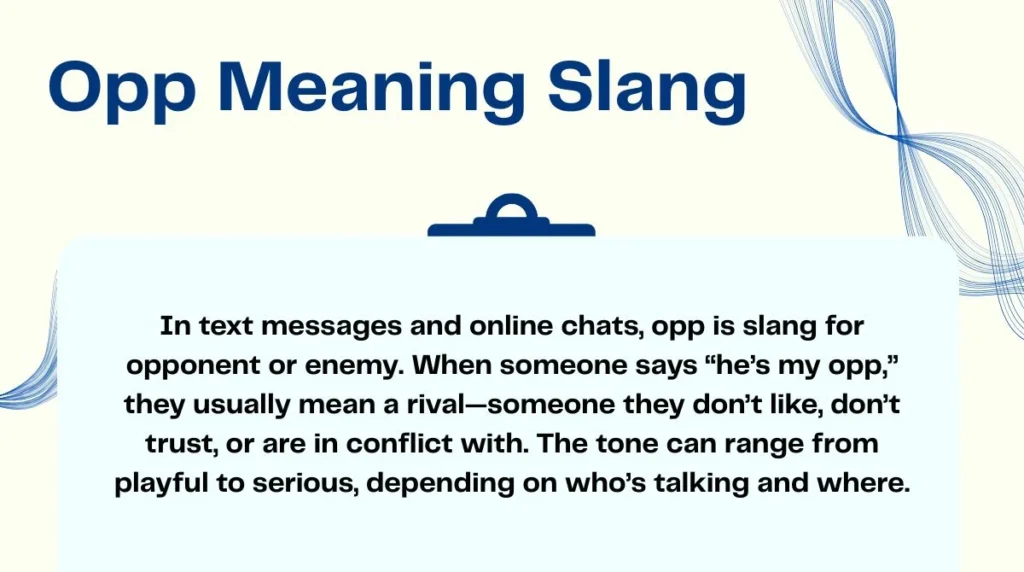
In text messages and online chats, opp is slang for opponent or enemy. When someone says “he’s my opp,” they usually mean a rival—someone they don’t like, don’t trust, or are in conflict with. The tone can range from playful to serious, depending on who’s talking and where.
In casual conversations, “opp” doesn’t always mean violence or deep hatred. Friends may jokingly call each other opps during games, debates, or online arguments. However, in certain online communities—especially those influenced by hip-hop or street culture—“opp” can carry a heavier meaning, implying real-life tension.
In texting, “opp” is often used to save time. It’s short, quick, and understood by people familiar with modern slang. You’ll usually see it paired with strong opinions or emotions.
Common chat-style uses include:
- Talking about rivalry
- Calling out someone who disagrees strongly
- Referring to a competing group or person
Tone matters a lot. The same word can sound joking in one chat and serious in another. Emojis, context, and relationship between speakers all help define the meaning.
Full Form, Stands For & Short Meaning of Opp
Many people ask for the “full form” of opp, but technically, opp is not an acronym. It’s a shortened slang form of the word opponent. Over time, the ending of the word was dropped to make it quicker and more casual.
Short meaning of opp:
- Opp = opponent
- Opp = rival
- Opp = enemy (in slang context)
Unlike formal abbreviations like “LOL” or “BRB,” opp comes from spoken language rather than typing culture. People were already saying “opp” out loud before it became popular in texts and social media captions.
Because it’s informal, opp doesn’t have a single official definition. Its meaning depends on:
- Tone of conversation
- Platform (text, rap lyrics, comments)
- Relationship between people
In friendly settings, it may simply mean competition. In hostile settings, it can suggest conflict. Understanding this flexibility helps avoid awkward or offensive misunderstandings.
Origin, History & First Known Use of Opp
The slang term opp originated in African American Vernacular English (AAVE) and street culture in the United States. It gained traction through hip-hop music, where artists often refer to rivals or enemies as “opps.” Lyrics helped spread the term beyond local communities into mainstream internet culture.
The word itself comes from the standard English word “opponent,” but its slang use became popular in the early 2010s. Social media platforms, especially Twitter and later Instagram and TikTok, accelerated its reach.
As rap music grew globally, so did its vocabulary. Fans repeated the slang in comments, captions, and memes, sometimes without fully understanding its roots. Over time, “opp” evolved from a serious term into one that could also be playful or exaggerated online.
Today, its usage spans:
- Music and lyrics
- Gaming communities
- Teen and young adult chats
- Social media humor
Knowing its origin helps explain why some people take the word more seriously than others.
How People Use Opp in Daily Conversations
In everyday conversations, people use opp in both serious and lighthearted ways. Context is everything. Among friends, it can be teasing. Among rivals, it can signal real disagreement.
Examples of daily use:
- Friendly competition: “You’re my opp in this game.”
- Disagreement: “Anyone who thinks that is an opp.”
- Social drama: “She switched sides, now she’s an opp.”
Offline, people may say it jokingly with a smile. Online, without facial cues, it can sound harsher. That’s why emojis or tone indicators are often added.
People rarely use “opp” in professional or formal settings. It’s best kept for casual conversations where slang is normal and expected.
Opp Meaning Across WhatsApp, Instagram, TikTok & Snapchat
The opp meaning slang stays similar across platforms, but usage style changes.
- WhatsApp: Mostly private chats. Often joking or personal.
- Instagram: Used in captions, comments, or memes, sometimes exaggerated.
- TikTok: Very common in videos, trends, and storytelling.
- Snapchat: Casual, quick, often playful with emojis.
Platform culture shapes tone. TikTok tends to exaggerate slang for humor, while WhatsApp chats depend more on personal relationships. Always read the room before using it.
Different Meanings of Opp in Other Fields
Outside slang, OPP can mean different things:
- Business: Operational Planning Process
- Education: Ontario Provincial Police (Canada)
- Gaming: Opponent (shortened, non-slang)
These meanings are unrelated to slang and usually written in uppercase. Confusion happens when people mix contexts, so capitalization matters.
Common Confusions, Mistakes & Wrong Interpretations
Many mistakes come from assuming “opp” always means violence. That’s not true. While it can be serious, it’s often casual online.
Common misunderstandings:
- Thinking opp is always dangerous
- Using it jokingly with someone unfamiliar
- Confusing it with “op” (original poster)
If unsure, it’s safer not to use it or ask what the person means.
Similar Terms, Alternatives & Related Slang
Related slang includes:
- Rival
- Hater
- Enemy
- Foe
- Op (original poster – different meaning)
Internal linking suggestion: You could link this article to pages like “OP Meaning in Text” or “Rival Slang Words Explained” to help readers explore related terms.
Examples of Opp in Real Chat Situations
- “Bro beat me again 😭 he’s my opp now.”
- “Anyone hating on this song is an opp 🙄.”
- “We cool, no opp energy here ✌️.”
These examples show how tone changes with emojis.
How to Reply When Someone Says Opp
Your reply depends on intent:
- Joke back: “Guess we rivals now 😂”
- Calm response: “Why you calling me an opp?”
- Ignore if hostile
Reading tone helps avoid conflict.
Is Opp Still Popular? Trends & Online Usage
Yes, opp is still popular, especially among Gen Z. TikTok keeps it alive through trends and humor. While some slang fades fast, opp has stayed relevant because it’s short, flexible, and expressive.
FAQs: What People Also Ask
1. Is opp a bad word?
Not always. It depends on context and tone.
2. Can opp be used jokingly?
Yes, very often among friends.
3. Is opp the same as op?
No. “Op” usually means original poster.
4. Should I use opp in formal writing?
No, it’s informal slang.
5. Why do rappers say opp so much?
It represents rivalry and conflict in lyrics.
Conclusion
Understanding the opp meaning slang helps you navigate modern conversations with confidence.
While the word comes from “opponent,” its tone can shift from playful to serious depending on context.
Social media, music, and texting culture have made “opp” a common term, but that doesn’t mean it should be used carelessly.
Knowing when and how to use it—and when not to—can save you from awkward moments or misunderstandings.
As slang continues to evolve, words like “opp” show how language adapts to culture and community.
Whether you hear it in a joke, a meme, or a heated debate, now you know exactly what it means and how to respond.

Joseph Henry is the creative mind behind PunsMarkete, spreading smiles one clever pun and joke at a time. He believes laughter is the shortest distance between people.