The word schmaltz often pops up when people talk about emotions, movies, writing, or even food.
Many search for schmaltz meaning because the word feels expressive but unclear—sometimes funny, sometimes critical, and sometimes warm.
Is it an insult? A compliment? Or something in between? The answer depends on context.
Originally rooted in food culture, schmaltz has evolved into a colorful term used in everyday speech, online chats, and media commentary.
Today, you’ll see it used to describe exaggerated emotion, over-the-top sentimentality, or cheesy moments that try a little too hard to make you feel something.
This article breaks down the meaning of schmaltz in simple terms, explores where it came from, and explains how people use it across modern platforms like WhatsApp, Instagram, TikTok, and Snapchat.
What Does Schmaltz Mean in Text & Chat?
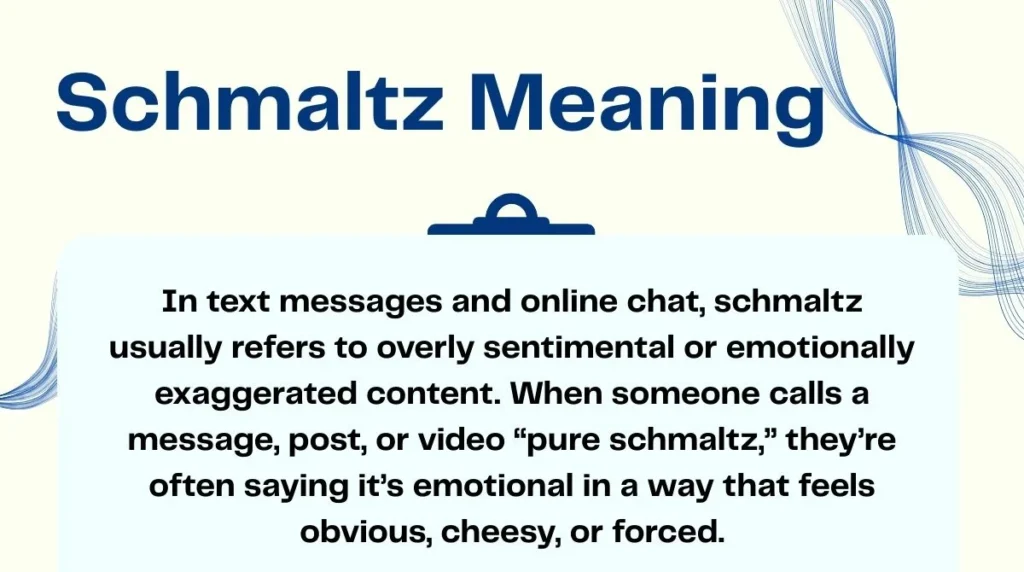
In text messages and online chat, schmaltz usually refers to overly sentimental or emotionally exaggerated content. When someone calls a message, post, or video “pure schmaltz,” they’re often saying it’s emotional in a way that feels obvious, cheesy, or forced.
In casual chat, it’s rarely aggressive. Instead, it carries a mild teasing tone. Friends might use it to joke about dramatic captions, romantic quotes, or overly sweet messages. Depending on context, it can be playful or lightly critical.
In chat, schmaltz often means:
- Too emotional
- Excessively sweet
- Dramatic in a cheesy way
- Trying hard to tug at heartstrings
For example, if someone posts a long emotional caption about friendship with lots of hearts and crying emojis, another person might respond with “Haha, that’s pure schmaltz 😂”.
The key thing to remember: schmaltz in text is about style, not sincerity. It doesn’t always mean the feeling is fake—it just means the expression is a bit much.
Full Form, Stands For & Short Meaning of Schmaltz
Unlike modern slang or abbreviations, schmaltz does not have a full form. It’s a standalone word, not an acronym.
Short meaning of schmaltz:
Excessive sentimentality or emotional cheesiness.
In its most basic sense, schmaltz describes emotion that feels exaggerated. People use it when something leans heavily into feelings—especially nostalgia, romance, or sadness—without subtlety.
You might see it used in:
- Film reviews
- Book critiques
- Social media captions
- Casual conversation
There is no hidden abbreviation behind the word. Its power comes from tone and context, not letters standing for something else.
Origin, History & First Known Use of Schmaltz
The word schmaltz comes from Yiddish, where it originally meant rendered chicken fat used in cooking. This literal meaning dates back centuries in Central and Eastern European Jewish communities.
Over time, the meaning shifted. Because schmaltz is rich, heavy, and indulgent, English speakers began using it metaphorically. By the mid-20th century, schmaltz started describing emotional richness that felt heavy or excessive.
Key timeline:
- Original meaning: Chicken fat (literal, culinary)
- Early metaphorical use: Rich or heavy emotional tone
- Modern usage: Over-the-top sentimentality
This evolution makes sense—just as too much fat can overpower a dish, too much emotion can overwhelm a story.
How People Use Schmaltz in Daily Conversations
In everyday speech, schmaltz is often used casually and humorously. People rarely say it angrily. Instead, it’s more of a light critique.
You might hear it in conversations about:
- Romantic movies
- Emotional speeches
- Long captions or messages
- Holiday commercials
Daily conversation examples:
- “That movie was good, but the ending was total schmaltz.”
- “I like the message, just less schmaltz next time.”
- “This song is pure schmaltz—and I still love it.”
Notice how it doesn’t always mean “bad.” Sometimes people enjoy schmaltz, especially during holidays or nostalgic moments.
Schmaltz Meaning Across WhatsApp, Instagram, TikTok & Snapchat
On social media platforms, schmaltz often reacts to emotional content.
Platform-specific use:
- WhatsApp: Reacting to long emotional messages
- Instagram: Commenting on sentimental captions or reels
- TikTok: Describing dramatic storytelling videos
- Snapchat: Responding to emotional snaps or memories
Example reactions:
- “So much schmaltz here 🥲”
- “Cute, but very schmaltzy 💖”
- “Holiday vibes = full schmaltz 🎄”
It’s commonly paired with emojis to soften the tone and keep it playful.
Different Meanings of Schmaltz in Other Fields
While language use dominates today, schmaltz still has other meanings.
In food:
- Rendered poultry fat used in traditional cooking
In film & literature:
- Overly emotional storytelling
- Predictable emotional manipulation
In music:
- Songs that rely heavily on sentimental melodies
Each field keeps the same core idea: richness taken too far.
Common Confusions, Mistakes & Wrong Interpretations
Many people misunderstand schmaltz as:
- Insulting
- Fake emotion
- Sarcasm only
In reality:
- Schmaltz ≠ lying
- Schmaltz ≠ cruelty
- Schmaltz ≠ always negative
It’s about excess, not dishonesty.
Similar Terms, Alternatives & Related Slang
Words similar to schmaltz include:
- Cheesy
- Corny
- Sappy
- Overdramatic
- Sentimental
🔗 Internal linking suggestion: You could link this section to related pages like “cheesy meaning in slang” or “sappy meaning in text” for better SEO.
Examples of Schmaltz in Real Chat Situations
- “That anniversary post is adorable but pure schmaltz 💕”
- “Why am I crying? This video is full schmaltz 😭”
- “Holiday ads always bring the schmaltz 🎁”
How to Reply When Someone Says Schmaltz
You can reply depending on tone:
- Playful: “Guilty 😄”
- Agreeing: “Yeah, I went all in on the feelings.”
- Joking: “A little schmaltz never hurt anyone 😉”
Is Schmaltz Still Popular? Trends & Online Usage
Yes, schmaltz is still widely used, especially in:
- Media reviews
- Social commentary
- Emotional online content
It’s not trending slang, but it remains a timeless expressive word that fits modern digital culture perfectly.
FAQs – People Also Ask
1. Is schmaltz a bad word?
No, it’s usually mild and often playful.
2. Does schmaltz mean fake emotion?
No, it means excessive, not fake.
3. Can schmaltz be positive?
Yes, many people enjoy schmaltzy content.
4. Is schmaltz slang?
It’s informal but not modern slang.
5. Is schmaltz still used today?
Yes, especially online and in reviews.
Conclusion
The schmaltz meaning blends history, emotion, and modern expression into one powerful word.
From its origins as a cooking ingredient to its role in describing emotional excess, schmaltz has traveled far.
Today, it’s commonly used in chats, social media, and cultural commentary to describe moments that lean heavily into sentiment.
Whether you love schmaltz or laugh at it, the word helps us talk about emotion with nuance and humor.
Understanding how and when to use it makes your communication clearer and more expressive.
Sometimes life needs subtlety—and sometimes, a little schmaltz makes things memorable.

Joseph Henry is the creative mind behind PunsMarkete, spreading smiles one clever pun and joke at a time. He believes laughter is the shortest distance between people.