If you’ve spent even five minutes texting, scrolling social media, or chatting online, you’ve probably seen “wtv” pop up.
It’s short, casual, and sometimes confusing. People search for it because they want to know if it’s rude, sarcastic, friendly, or just lazy typing.
The truth? It depends on the tone and context.
“Wtv” is part of the fast-moving world of internet slang where speed matters more than spelling.
Just like “lol” or “brb,” it helps people express feelings quickly in digital conversations. But unlike those, wtv can carry attitude — or none at all.
In this guide, we’ll break down what wtv meaning in text really is, where it came from, how people use it today, and when you should (or shouldn’t) use it.
What Does WTV Mean in Text & Chat?
In texting and online chat, “wtv” usually means “whatever.”
It’s a shortened, more relaxed way of saying you don’t mind, don’t care strongly, or are going along with something. The tone can range from easygoing to annoyed, depending on context.
It can mean:
- “I’m fine with anything”
- “Do what you want”
- “I don’t really care”
- “Let’s drop the topic”
Because tone is hard to read in text, wtv meaning in text can feel neutral or passive-aggressive. That’s why emojis or punctuation often change how it feels.
Examples:
- “Pizza or burgers?”
“Wtv, you pick 🙂” → relaxed, friendly - “You never listen.”
“wtv.” → annoyed or dismissive
So while it’s simple, wtv carries emotional weight based on the situation.
Full Form, Stands For & Short Meaning of WTV
Full form: Whatever
Short meaning: I don’t mind / It doesn’t matter / Do as you wish
Unlike some slang that stands for full phrases (like “smh” = shaking my head), wtv is just a shortened spelling, dropping vowels for speed.
People use it because:
- It’s faster to type
- It feels casual
- It matches the relaxed style of online chatting
You’ll often see variations like:
- WTV (uppercase)
- wtv (lowercase)
- Wtv (mixed)
All mean the same thing, but lowercase “wtv” can feel more indifferent, while uppercase might look more direct.
Origin, History & First Known Use of WTV
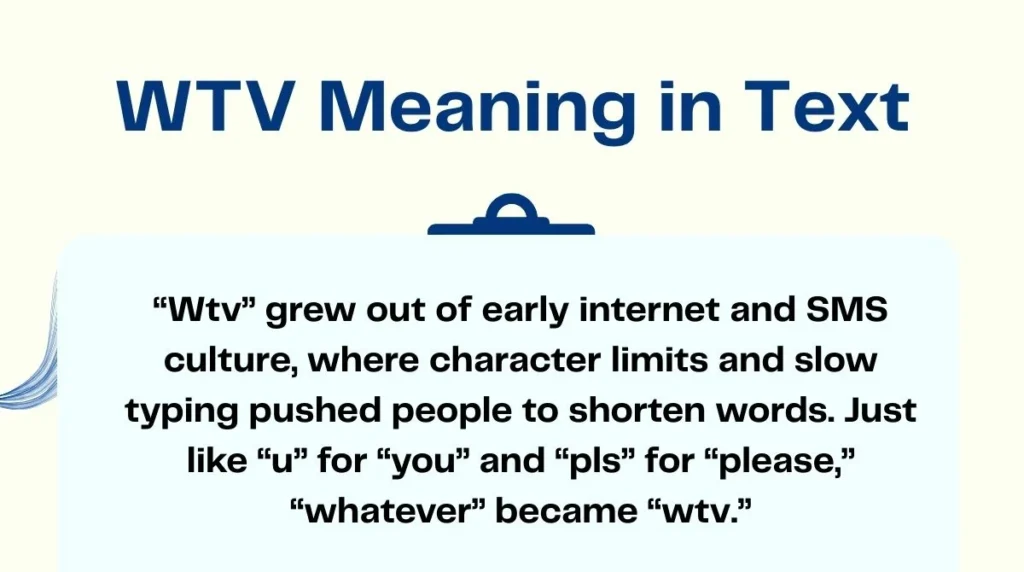
“Wtv” grew out of early internet and SMS culture, where character limits and slow typing pushed people to shorten words. Just like “u” for “you” and “pls” for “please,” “whatever” became “wtv.”
It likely started gaining popularity in the early 2000s when:
- Text messaging became common
- Chat rooms and instant messengers were popular
- Teens created faster ways to talk online
Over time, it spread to social media platforms, where short, punchy text is the norm. Today, wtv meaning in text is widely understood across age groups, though younger users tend to use it more casually.
How People Use WTV in Daily Conversations
In everyday texting, wtv is mostly used to show flexibility or mild disinterest.
Common everyday uses:
- Agreeing without strong opinion
“Movie at 7 or 8?” → “Wtv works” - Ending a small debate
“We can argue later, wtv.” - Showing emotional distance
“I tried. Wtv.”
It can also be playful among close friends:
- “You always steal my fries.”
“Wtv, they were good 😂”
But in serious talks, wtv can seem dismissive, so tone matters a lot.
WTV Meaning Across WhatsApp, Instagram, TikTok & Snapchat
The wtv meaning in text stays the same, but how it feels can change depending on platform culture.
WhatsApp:
Often neutral. Used in everyday planning chats.
Instagram DMs:
Can feel flirty, casual, or slightly aloof.
TikTok comments:
Usually playful or sarcastic. Sometimes used in jokes or trends.
Snapchat:
Often light and relaxed, especially in quick replies.
Example across platforms:
- “Should I post this pic?”
“Wtv, you look good 😎”
Platform vibe influences tone more than the word itself.
Different Meanings of WTV in Other Fields
While slang dominates, WTV can also be an abbreviation outside texting:
- Wireless Television (WTV) in broadcasting contexts
- Web TV referring to streaming platforms
- Company or brand initials
Still, in casual digital conversation, wtv almost always means “whatever.” Context usually makes it clear.
Common Confusions, Mistakes & Wrong Interpretations
Some people misunderstand wtv because tone isn’t obvious.
Common mistakes:
- Thinking it’s always rude
- Reading it as anger when it’s neutral
- Using it in formal settings (not a good idea)
Wrong situations to use “wtv”:
- Work emails
- School assignments
- Professional chats
Better options there: “No preference” or “Either works for me.”
Similar Terms, Alternatives & Related Slang
If you don’t want to use “wtv,” here are alternatives:
- IDC – I don’t care
- Doesn’t matter
- Up to you
- All good
- No worries
For internal linking, you could connect this article to:
- “IDC meaning in text”
- “SMH meaning in chat”
- “BRB full form in messages”
These help readers explore related slang.
Examples of WTV in Real Chat Situations
Here are realistic chat examples:
- “Pick a restaurant.”
“Wtv, I’m hungry 😅” - “You forgot again.”
“Wtv…” - “Blue or black hoodie?”
“Wtv looks better on me” - “We can hang later.”
“Wtv, just text me”
Notice how punctuation and emojis change the mood.
How to Reply When Someone Says WTV
Your response depends on tone.
If it sounds neutral:
- “Cool, I’ll decide then!”
- “Alright, I’ll pick 😊”
If it sounds annoyed:
- “Hey, is everything okay?”
- “Did I upset you?”
If it sounds playful:
- “Don’t act like you don’t care 😂”
- “You totally have an opinion!”
Is WTV Still Popular? Trends & Online Usage
Yes — wtv is still widely used, especially in casual texting and social media chats. Short slang remains popular because people prefer fast, low-effort typing.
However, some users now switch between:
- “whatever”
- “idc”
- emojis instead of words
Even so, wtv meaning in text remains relevant and easy to recognize.
FAQs About WTV Meaning in Text
1. Is “wtv” rude?
Not always. It can be neutral, but tone may make it seem dismissive.
2. Does “wtv” always mean “whatever”?
Yes, in texting it almost always does.
3. Should I use “wtv” in professional messages?
No, it’s too casual for work or formal writing.
4. What’s the difference between “wtv” and “idc”?
“IDC” means “I don’t care” directly. “Wtv” can sound softer or more flexible.
5. Why do people shorten “whatever” to “wtv”?
To type faster and keep chats casual.
Conclusion
Now you know the full story behind wtv meaning in text.
It’s a quick, casual version of “whatever,” used to show flexibility, indifference, or mild emotion depending on tone.
While it works great in friendly chats, it can come across as cold or annoyed if used without care.
Like most internet slang, context is everything. Emojis, punctuation, and the situation all shape how it feels.
Use it wisely, keep your audience in mind, and you’ll never be misunderstood.

Joseph Henry is the creative mind behind PunsMarkete, spreading smiles one clever pun and joke at a time. He believes laughter is the shortest distance between people.